Dosa Calories: Plain, Masala and Ghee Roast
· Viral Tandel
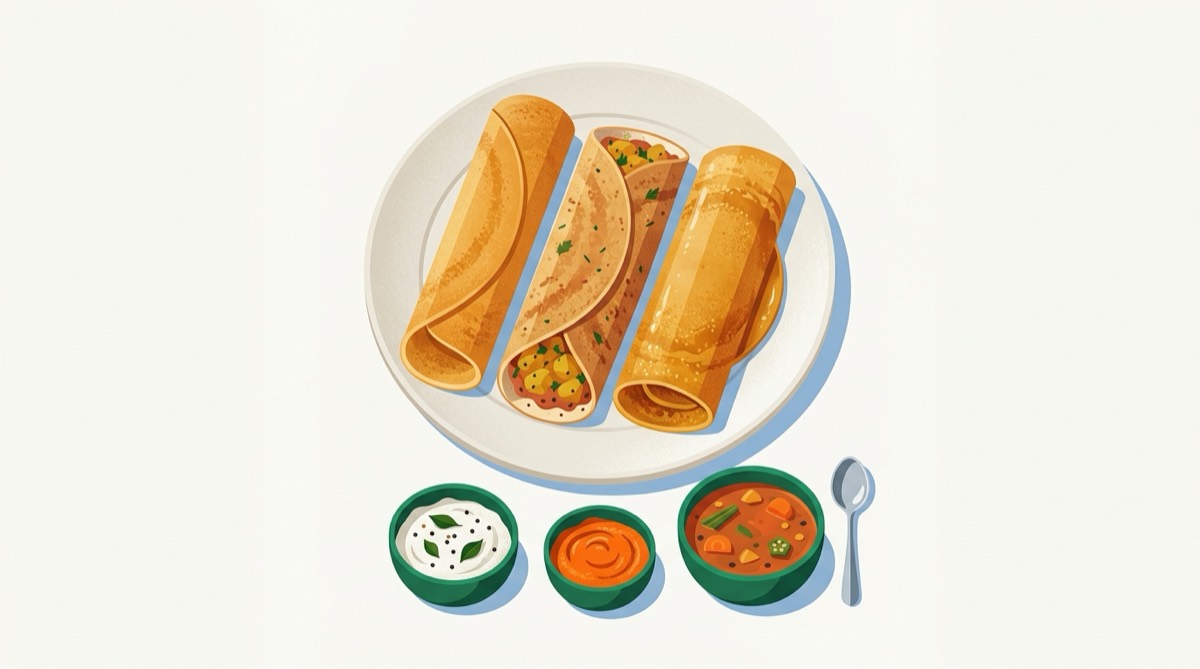
Dosa calories depend enormously on which dosa you mean: a thin plain one, a potato-filled masala dosa, or a ghee roast cooked with noticeably more fat on the tawa. This guide gives the sourced figure for plain dosa and explains why the more elaborate versions do not have one honest number to offer instead.
Key takeaways
- A medium plain dosa (80 g) is 168 kcal; a small one (35 g) is 74 kcal, per USDA FoodData Central.
- Masala dosa and ghee roast dosa have no separate published figure. Both add real calories, potato filling for one, extra ghee for the other, on top of the plain number.
- Dosa is pan-fried but thin, so even a medium one carries meaningfully less fat than a deep-fried snack of similar size.
- Idli, steamed rather than fried, runs lower in fat than dosa gram for gram, though both are far lighter than fried Indian snacks.
- Sambar and chutney, almost always served alongside, are not included in the dosa figure and have no verified number of their own in the sources this site uses.
Plain dosa, sourced
| Serving | Calories | Protein | Carbs | Fat |
|---|---|---|---|---|
| 100 g | 210 kcal | 5.7 g | 37.0 g | 4.1 g |
| 1 small (35 g) | 74 kcal | 2.0 g | 13.0 g | 1.4 g |
| 1 medium (80 g) | 168 kcal | 4.6 g | 29.6 g | 3.2 g |
These figures are for a plain dosa cooked on a tawa with a modest amount of oil, no potato masala filling, and no extra ghee beyond what a standard dosa recipe uses.
Masala dosa and ghee roast: why there is no fixed number
A masala dosa wraps the same thin batter around a spiced potato filling, and that filling is not a trivial add-on, it can weigh as much as the dosa itself and carries its own oil from being cooked separately. A ghee roast dosa keeps the batter plain but is cooked with a noticeably heavier hand on the ghee, brushed or poured onto the tawa rather than lightly greased.
Neither variant has a separate entry in USDA FoodData Central or the restaurant chain data this site tracks, and the amount of potato filling or extra ghee used varies enough by kitchen that a single number would be a guess wearing a lab coat. The honest answer for both: it varies by recipe, so scan it. The plain dosa figure above is a reasonable starting floor for either variant, not the number itself.
Dosa compared with idli
Dosa and idli are made from a very similar fermented rice-and-lentil batter, and the difference between them is almost entirely the cooking method: dosa is spread thin and pan-fried, idli is steamed in molds. That single difference is why dosa carries real, if modest, fat content while idli carries almost none. See idli calories for the steamed side of this comparison, sourced the same way as this page.
Compared with a genuinely fried Indian snack, dosa still comes out ahead. A medium dosa's 3.2 g of fat is a fraction of what a deep-fried samosa or pakora carries for a similar-sized piece, since a dosa uses comparatively little oil spread thin across a wide, thin batter rather than fully submerging the food in oil.
What is served alongside, and what is not counted
Dosa rarely arrives without sambar, a tangy lentil and vegetable stew, and at least one chutney on the side. Sambar is a distinct preparation from the plain dal covered in dal calories, built with tamarind and vegetables rather than just tempered lentils, and neither sambar nor chutney has a verified figure in the sources this site uses. Log them as their own items using your best estimate of the portion rather than assuming the dosa figure above already accounts for them, since it does not.
Logging dosa accurately
If your dosa is plain and thin, the figures above are a solid starting point. If it is masala, ghee roast, or visibly glistening with extra oil, correct the estimate upward rather than trust the plain number, and log sambar and chutney separately. The logging Indian food in a calorie tracker guide covers this kind of correction across South Indian breakfast foods generally, and the Indian food calories guide covers dosa alongside the rest of a typical South Indian spread.
Next time dosa is on your plate, log it in KalTrack and adjust the estimate for any filling, extra ghee, or sides you can identify.
This is general information about tracking food, not medical advice. If you are managing a health condition or working to a clinical target, talk to your doctor or a registered dietitian before changing how you eat.
Questions
How many calories are in a plain dosa?
A medium dosa (80 g) is 168 kcal; a small one (35 g) is 74 kcal, per USDA FoodData Central. Both figures are for a plain dosa, with no potato filling or extra ghee.
How many calories are in a masala dosa?
There is no verified figure for masala dosa specifically. The potato filling adds its own calories on top of the plain dosa figure, and the amount varies by recipe, so the honest answer is to scan it rather than assume a fixed number.
Is a ghee roast dosa much higher in calories than a plain one?
Almost certainly, since a ghee roast is cooked with noticeably more ghee on the tawa, but there is no separate published figure for it. Treat the plain dosa number as a floor, not the actual total, for a ghee roast.
Is dosa lower in calories than idli?
Per gram, dosa runs a little higher than idli, since it is pan-fried rather than steamed. A medium dosa (168 kcal) still lands well below a fried snack like samosa, though, since it uses comparatively little oil per piece.
Sources
- USDA FoodData Central, FDC ID 2708347: fdc.nal.usda.gov/food-details/2708347/nutrients