
Indian Sweets and Desserts: A Calorie Guide
· Viral Tandel
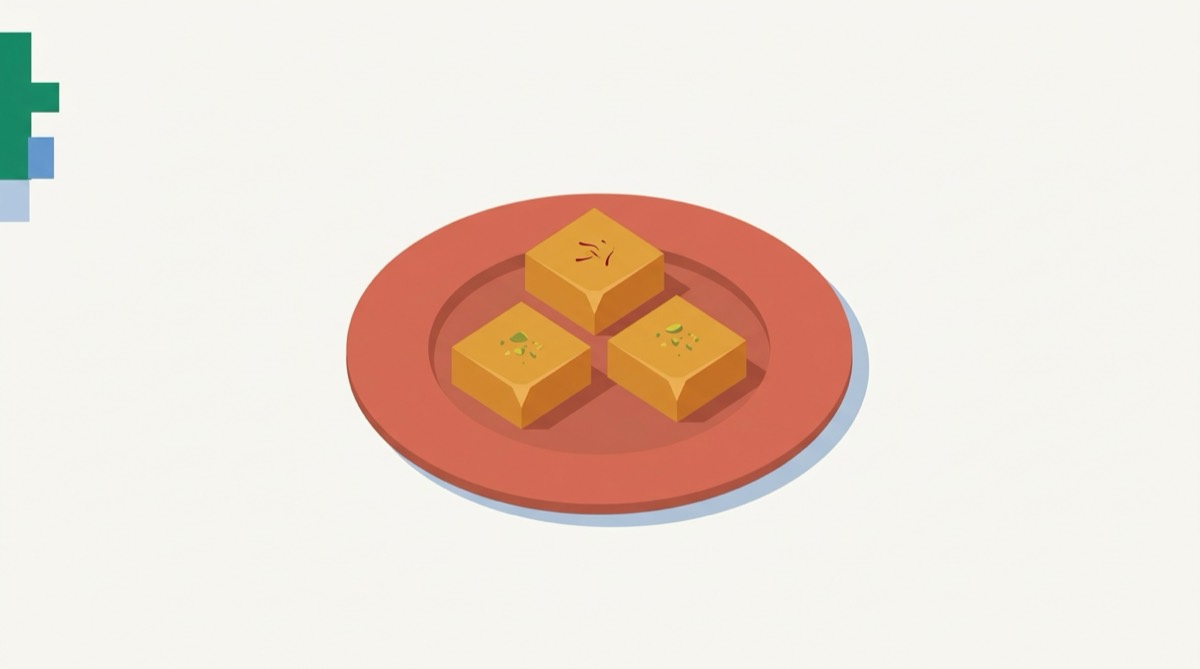
Indian sweets calories are some of the hardest numbers on this entire site to pin down, and this guide is upfront about that from the first paragraph rather than the last. None of the common mithai, gulab jamun, jalebi, kheer, halwa, barfi, ladoo, appear in the sourced data this site relies on. What follows is organized around why that is true, grouped by how each sweet is actually made, so the guide is still useful even without a number attached to every name.
Key takeaways
- No common Indian sweet or lassi has a verified figure in the sources this site uses. That is stated plainly rather than papered over with an estimate.
- What drives the calorie count in mithai is fat and sugar concentration, which depends on the specific batch far more than on which sweet you picked.
- Fried, syrup-soaked sweets carry the most fat and sugar together; milk-reduction sweets carry concentrated dairy fat and sugar without frying; milky puddings dilute both into a larger volume.
- Packaged mithai from a grocery brand is the one reliable path to a real number in this category, because it carries a manufacturer's printed panel you can scan.
- Homemade mithai can be roughly estimated by weighing the ghee, sugar and milk that actually went into the pot, even without a number for the finished sweet itself.
Why this category resists a real number
Every dish elsewhere on this site that has a sourced figure shares one property: a reasonably standard preparation, tested or surveyed by USDA, or a specific manufactured product with its own printed panel. Mithai mostly has neither. A gulab jamun is fried khoya dough soaked in sugar syrup until it stops absorbing more, and how long that soak runs, how hot the syrup was, and how dense the dough was all change the final fat and sugar content substantially between one kitchen and the next. A halwa can carry a spoonful of ghee or six, depending entirely on the cook. None of that variation is something a single published number could honestly capture.
This is not a gap unique to this site. It is why chicken tikka masala, olive oil and lassi are also flagged as unsourceable in the Indian food calories guide: recipes that vary this much by household do not have one correct calorie count, only a range wide enough to be nearly useless as a single figure. Rather than publish a number that looks authoritative and is not, this guide groups mithai by how they are made and explains what actually drives the calorie count in each group.
Fried and syrup-soaked sweets
Gulab jamun, jalebi and balushahi share a method: a dough or batter is fried, then soaked in sugar syrup, sometimes briefly, sometimes until fully saturated. Two separate sources of concentrated calories stack on top of each other here, the frying oil absorbed into the dough and the sugar syrup absorbed after, and both vary by batch.
There is no verified figure for any of these three in the sources this site uses. What can be said honestly is how frying itself behaves in foods this site can source: a samosa, fried rather than syrup-soaked, carries 17.47 g of fat per 100 g per USDA FoodData Central, while a pakora, also fried but with a thinner batter, carries 4.77 g of fat per 100 g. That is close to a fourfold difference between two fried snacks in the same cuisine, driven entirely by batter thickness and frying time. A syrup-soaked sweet adds a second variable, sugar absorption, on top of that same frying variance, which is exactly why a single trustworthy number for gulab jamun or jalebi is not available. Gulab jamun and jalebi calories goes through what is and is not knowable about this pair specifically.
Milk-reduction sweets: barfi, peda and kalakand
A different family of mithai starts from khoya or mawa, milk reduced slowly over heat until most of the water has cooked off, then set with sugar into barfi, peda or kalakand. There is no frying here, but the concentration process itself is the issue: reducing milk down removes water and leaves fat, protein and milk sugars behind in a much smaller volume, and how far a specific batch was reduced changes the final density and calorie count meaningfully.
Plain milk at 2 percent fat is 50 kcal per 100 g per USDA FoodData Central, a reasonable starting point for what goes into the pot, but a barfi is not milk, it is milk reduced by a large and variable fraction and then mixed with added sugar and often ghee. That transformation is exactly what makes a starting-ingredient figure useless as a stand-in for the finished sweet, and it is why this guide will not offer one dressed up as an estimate.
Milky puddings: kheer, phirni and rasmalai
Kheer and its relatives dilute the same milk-and-sugar combination into a much larger, more liquid volume, generally with rice, vermicelli or paneer added rather than reduced all the way down to khoya. That dilution keeps the calorie density lower than a barfi or a ladoo, but it does not make the number knowable, since the ratio of milk to rice to sugar varies by household and by how thick a particular cook likes their kheer.
What can be said with a real citation is the base ingredients before sugar enters the picture. A cup of cooked white rice is 167 kcal per USDA FoodData Central, and a cup of 2 percent milk is roughly 122 kcal by the same source. Neither figure is the finished dish, since kheer adds a meaningful amount of sugar on top of both and often reduces the milk somewhat while cooking, but they are a real floor for the two base ingredients if you are trying to build a rough estimate yourself. Kheer calories walks through that component approach in more depth.
Rasmalai deserves its own note, since it is built on chenna, a fresh cheese close to paneer. USDA's paneer entry (FDC ID 2705740) carries a documented caution: its listed carbohydrate figure, 22.46 g per 100 g, runs high for what fresh paneer or chenna is generally understood to contain, and this site will not build any conclusion on that specific number. It is mentioned here only to flag that even the closest sourced ingredient to rasmalai's base carries a figure worth treating carefully rather than leaning on.
Ghee-cooked halwas and ladoos
Gajar halwa, sooji halwa, moong dal halwa and most ladoo varieties share a cooking method: a base ingredient, carrot, semolina, lentil flour, is cooked slowly in ghee, then sweetened. Ghee quantity is the single biggest swing factor here, and it is added by feel rather than by any standard recipe, which is exactly the tadka problem covered elsewhere on this site applied to dessert instead of dal.
There is no verified per-tablespoon figure for ghee in the sources this site uses, and no verified figure for any specific halwa or ladoo either, so this guide will not manufacture one. What is worth knowing is the shape of the problem: a halwa made with a light hand on the ghee and one made rich enough to hold its shape when pressed into a mold can differ by a very wide margin using the same base ingredient and the same name. Halwa calories covers this in more depth, including why the base ingredient itself matters less than the ghee.
Lassi: the one drink in this category
Lassi is yogurt, blended with water or milk and usually sugar, and it belongs in this guide rather than with the everyday-food dairy entries because its sugar content varies just as widely as any solid mithai. There is no verified figure for lassi in the sources this site uses. A rough build from components is possible: plain Greek yogurt and 2 percent milk both carry real USDA figures, but the sugar added to a typical sweet lassi does not, and sugar is often the larger share of a sweet lassi's total than people assume. Lassi calories covers the component breakdown in more detail than fits here.
The one place a real number exists: the package
There is one reliable exception to everything above: mithai bought packaged from a grocery brand rather than made fresh. A boxed barfi, a bagged jalebi, or a jar of gulab jamun in syrup from an Indian grocery brand almost always carries a printed nutrition panel, because packaged food sold in the US is required to have one. That figure is measured and published by the manufacturer for that specific product, the same category of number this site uses for Chipotle, Subway and Starbucks elsewhere.
This is exactly where a barcode calorie scanner earns its keep. Where a homemade or restaurant-counter sweet has no number to give you, a packaged one usually does, and scanning it is faster and more accurate than trying to estimate it from a photo or guessing at a household recipe.
Two habits make that packaged figure more useful once you have it. First, check the serving size before you trust the headline number: a box of barfi or ladoo often defines one serving as a single small piece, so a figure that looks modest can multiply quickly if you naturally eat two or three. Second, read the ingredient list in the order it is printed, since ingredients are listed by weight from most to least; ghee or sugar appearing in the first few items is a real signal about where that specific product sits, even before you look at the calorie line.
Building your own rough estimate
If you are making mithai at home, the most honest approach is to weigh what actually went into the pot rather than searching for a number for the finished dish. Weigh the sugar, the ghee and the milk or khoya separately, using their own labels or a kitchen scale, and add them as their own logged items alongside whatever base ingredient you used. It will not be a lab-tested figure, but it will be built from what you actually used rather than borrowed from a stranger's recipe with a very different ghee hand.
For a store-bought sweet with no packaging, from a sweet shop counter rather than a sealed box, there is no shortcut around the honest answer: it varies by recipe, so treat any number you see quoted elsewhere with real skepticism, the same way this guide has treated its own gaps.
Why this matters most around festivals
Mithai rarely arrives one piece at a time. Boxes are gifted and shared, a festival table often holds three or four varieties at once, and the small size of an individual piece, a ladoo, a square of barfi, makes it easy to eat several without registering it as a full dessert portion the way a slice of cake would register. None of the sourcing problems in this guide go away during a festival, but the portion problem gets larger, since the honest total for an evening is usually several pieces across several kinds, not the single piece that is easiest to picture when you think back on it.
Logging each piece as you eat it, by type, rather than trying to reconstruct an evening's mithai from memory afterward, is the more reliable habit here, for the same reason logging a meal before it gets mixed together is more reliable than logging it from memory later.
How KalTrack handles this category
The analysis behind KalTrack recognizes mithai as what they are rather than mapping them onto a generic "dessert" entry, and it presents its estimate clearly as an estimate rather than a confident number dressed up to look sourced. For anything packaged, the barcode and label paths are free and unlimited and give you the manufacturer's real figure instead. Next time a sweet is in front of you, whether it came from a box with a barcode or a plate with no packaging at all, log it in KalTrack and treat the result the way this whole guide has: as an honest estimate, not a fact.
This is general information about tracking food, not medical advice. If you are managing a health condition or working to a clinical target, talk to your doctor or a registered dietitian before changing how you eat.
Questions
How many calories are in a typical Indian sweet?
There is no verified figure this site can give you for gulab jamun, jalebi, kheer, halwa, barfi or any other common mithai. Sugar syrup absorption and ghee content vary enormously by who made it, which makes a single trustworthy number impossible to publish honestly.
Why does this guide have no numbers when the rest of the site does?
Because none of the common Indian sweets appear in the sourced data this site uses: USDA FoodData Central or the published brand datasets already on this site. Rather than estimate a number that looks precise but is not, the honest answer here is to say so.
Is there any reliable way to get a real number for a sweet?
Yes: packaged mithai from a grocery brand almost always carries a printed nutrition panel and a barcode, and that figure is measured by the manufacturer, not estimated. It is the one path in this whole category that gives you a genuine number.
What is the single biggest driver of calories in Indian sweets?
Fat and sugar concentration, driven by how much ghee, khoya or sugar syrup a specific batch absorbed. That varies far more by maker than by which sweet you picked, which is exactly why a per-dish figure would be misleading.
Sources
- USDA FoodData Central, FDC ID 2708730: fdc.nal.usda.gov/food-details/2708730/nutrients
- USDA FoodData Central, FDC ID 2710066: fdc.nal.usda.gov/food-details/2710066/nutrients
- USDA FoodData Central, FDC ID 2705386: fdc.nal.usda.gov/food-details/2705386/nutrients
- USDA FoodData Central, FDC ID 2708422: fdc.nal.usda.gov/food-details/2708422/nutrients
- USDA FoodData Central, FDC ID 2705740: fdc.nal.usda.gov/food-details/2705740/nutrients
- USDA FoodData Central, FDC ID 2710281: fdc.nal.usda.gov/food-details/2710281/nutrients