
Logging a Chinese takeaway without guessing at the sauce
· Viral Tandel
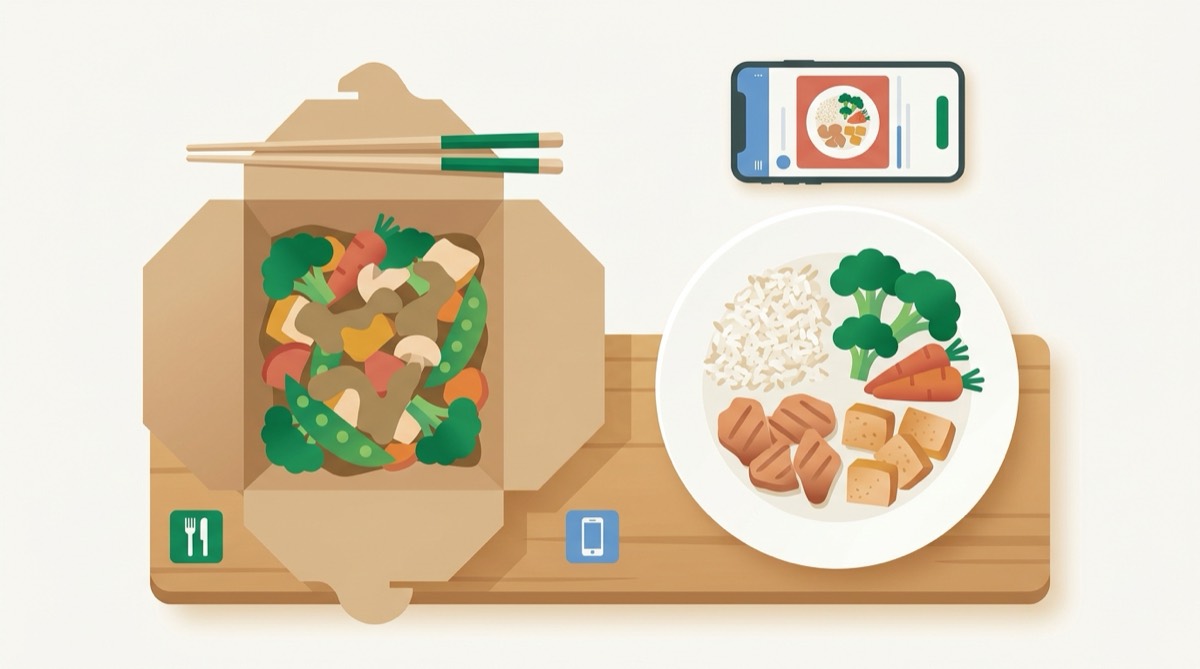
Logging a Chinese takeaway meal accurately runs into the same wall as logging most restaurant food: the calories are not in the parts you can see. A carton of fried rice or a plate of orange chicken looks like one dish, but it is really rice or noodles plus a meaningful amount of wok oil plus a sauce, and only one of those three is easy to estimate honestly.
Key takeaways
- Most Chinese takeaway comes from independent restaurants with no published nutrition data, so there is usually no figure to look up.
- Wok oil and sauce are stirred through the dish before it reaches you, which makes both invisible in a photo, the same failure mode covered in why photo calorie estimates run low.
- Steamed white rice is one part of this meal you can cite with a real figure. Fried rice, noodles in sauce and any battered, fried protein are not, so say so rather than guessing.
- Logging the rice, the protein and the sauce as separate lines beats searching for one entry that claims to cover the whole dish.
- This is the same shape of problem covered in logging Indian food in a calorie tracker that was not built for it: a cuisine built on oil-finished sauces poured over a starch base, hitting the same blind spot in almost every generic database.
The same shape as the Indian food problem
If you have read the Indian food calories guide on this site, this will sound familiar. Swap the tadka for wok oil and the dal for a stir-fry sauce, and the underlying issue is identical: a starch base that is easy to estimate, sitting under a sauce and a cooking fat that are not, all served as one dish name that a database treats as a single unknowable entry.
Chinese takeaway is arguably a harder case than most home-cooked Indian food, because it usually comes from a restaurant kitchen rather than your own, and restaurant kitchens use noticeably more oil than most people cook with at home. There is nobody to ask exactly how much went into the wok, and no packaging to read a figure off.
What you can actually cite: the rice
Plain steamed white rice, the side most Chinese takeaway orders include or offer separately, is close to a direct match for a real USDA entry. A cup of cooked white rice comes to 167 kcal, 3.5 g protein, 36.5 g carbs and 0.3 g fat, per USDA FoodData Central. That is a legitimate number to log for a plain steamed rice side.
Fried rice is a different dish built from that same rice. It picks up oil, often egg, soy sauce and whatever vegetables or meat were tossed through it during cooking, none of which are in the plain rice figure above. Treat that number as a floor for fried rice, the rice component alone, not the finished dish. The gap between the two is exactly the part a photo cannot see.
What you cannot cite: the sauce and the oil
There is no verified figure in the sources this site uses for wok oil, sweet and sour sauce, orange sauce, General Tso's sauce, black bean sauce, or any other Chinese takeaway sauce. Recipes vary enormously by kitchen, and a number invented to sound precise would be worse than no number at all. The honest answer here is the same one used across this site: it varies by recipe, so scan it if it came in a labeled bottle, or log it as an estimated rough addition rather than pretending it is zero.
The same goes for battered, deep-fried proteins like sweet and sour pork or General Tso's chicken. Frying adds real fat, but exactly how much depends on the batter and the kitchen, and this site does not have a sourced figure to hand you for either.
Log it in three pieces, not one
- The base: steamed rice or noodles, weighed or estimated by the container size, using a real figure like the rice one above where it applies.
- The protein: named separately, and flagged in your own head as fried or plain, since that changes the true total more than the protein choice itself does.
- The sauce: logged as its own rough item rather than folded invisibly into the dish, since it is where most of the fat and sugar actually live.
Photograph the carton before you stir it, the same advice that applies to any sauced dish, since once everything is mixed together no camera can see what is underneath. And log something rather than skipping the meal entirely: a rough three-part estimate that stays part of your regular habit beats a perfect log you only manage some weeks, which is the whole argument in why a rough log every day beats a perfect log twice a week.
Next time takeaway arrives, split it into rice, protein and sauce before you dig in, and log each piece in KalTrack rather than the carton as a whole.
This is general information about tracking food, not medical advice. If you are managing a health condition or working to a clinical target, talk to your doctor or a registered dietitian before changing how you eat.
Questions
Why is Chinese takeaway so hard to log accurately?
Most of it comes from independent restaurants that publish no nutrition data, and the dishes themselves are built on wok oil and sauce, both of which are stirred through the food and invisible in a photo or a generic database entry.
Is fried rice the same as steamed rice for logging purposes?
No. Steamed white rice is close to a plain USDA entry you can cite directly. Fried rice starts from that same rice but adds oil, egg and sauce during cooking, so the plain rice figure is a floor for fried rice, not the answer.
What is the single biggest thing people miss when logging Chinese takeaway?
The oil the dish was cooked in, plus the sauce it was finished with. Neither is visible once the dish is plated, and a generic database entry for a dish name rarely accounts for how much of either a specific kitchen used.
Should I log the dish name or its components?
Components: the rice or noodles, the protein, and the sauce as its own line if you can identify it. That gives you something checkable, where a single composite dish name usually does not.
Sources
- USDA FoodData Central, FDC ID 2708422: fdc.nal.usda.gov/food-details/2708422/nutrients