
Paratha Calories: Plain, Aloo and Stuffed
· Viral Tandel
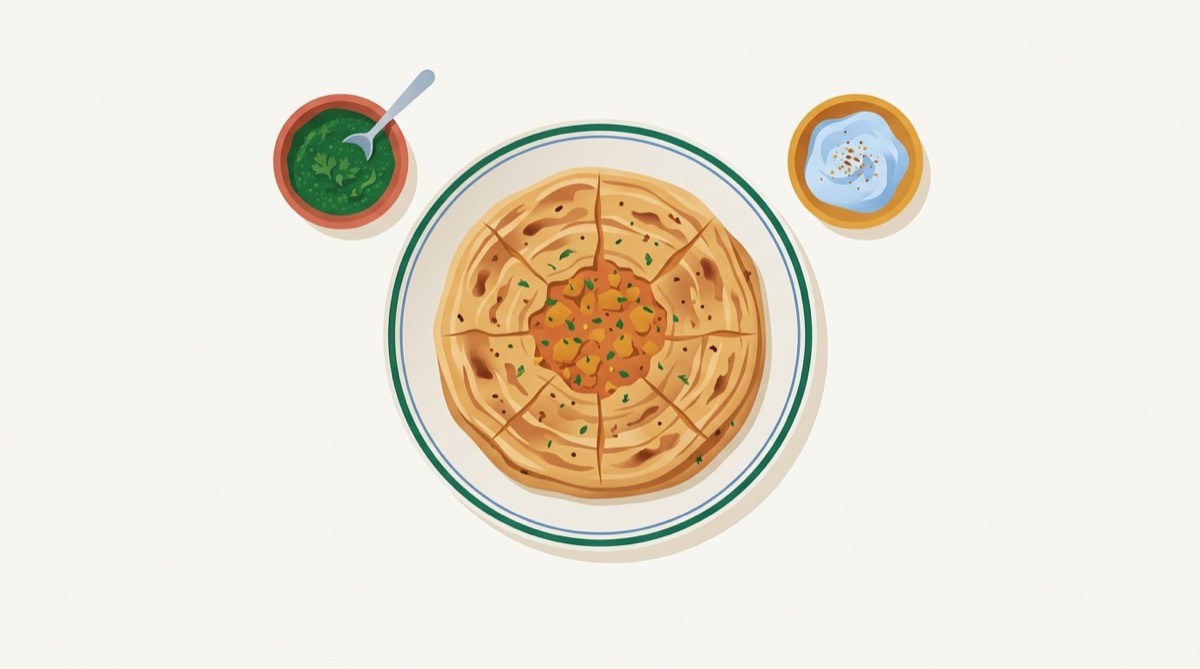
Paratha calories start from a plain dough figure that is genuinely sourced, and get considerably less certain the moment potato, paneer or another filling gets folded in. This guide gives the plain paratha number from USDA data and is honest about where a specific aloo or stuffed paratha figure simply does not exist yet.
Key takeaways
- One plain paratha (70 g) is 228 kcal, with 4.5 g protein, 31.7 g carbs and 9.2 g fat, per USDA FoodData Central.
- Paratha carries meaningfully more fat per 100 g than roti or naan, a direct result of ghee or oil layered into the dough and used to pan-fry it.
- Aloo paratha and other stuffed parathas have no separate published figure in the sources this site uses. The filling and any extra oil used to cook it are both real additions with no verified number to assign them.
- The plain figure above is a reasonable floor for a stuffed paratha, not a ceiling. A stuffed one will typically run higher, sometimes considerably so.
- Paratha is commonly eaten with dal, yogurt or a pickle, none of which are included in the bread figure itself.
Plain paratha, sourced
| Serving | Calories | Protein | Carbs | Fat |
|---|---|---|---|---|
| 100 g | 326 kcal | 6.4 g | 45.4 g | 13.2 g |
| 1 paratha (70 g) | 228 kcal | 4.5 g | 31.7 g | 9.2 g |
This is plain paratha: dough folded with fat and pan-fried, nothing stuffed inside it.
Why aloo and stuffed parathas have no single number
What makes a paratha a paratha, rather than a roti, is the layering: fat worked between folds of dough before it is rolled flat and pan-fried, often with more oil or ghee added to the pan itself. That process alone already explains most of the gap between paratha and a plain flatbread like roti or naan.
A stuffed paratha, aloo (potato), paneer, gobi (cauliflower), or a mixed vegetable filling, adds a second layer of uncertainty on top of that. The filling itself carries its own calories, mashed potato is different from grated paneer, and some fillings are pre-cooked with their own oil or spices before they ever go inside the dough. Neither USDA FoodData Central nor the restaurant datasets this site tracks separately publish a broken-out figure for a specific stuffed paratha, so rather than average a guess across every possible filling, the honest answer is the one used throughout this site: it varies by recipe, so scan it. Treat the plain paratha figure above as a starting floor for a stuffed one, not the actual number.
Paratha compared with roti and naan
| Bread | Serving | Calories | Protein | Carbs | Fat |
|---|---|---|---|---|---|
| Roti / chapati | 100 g | 297 kcal | 11.2 g | 46.4 g | 7.5 g |
| Naan | 100 g | 311 kcal | 11.1 g | 50.2 g | 7.3 g |
| Paratha | 100 g | 326 kcal | 6.4 g | 45.4 g | 13.2 g |
Fat is where paratha separates itself clearly from the other two: 13.2 g per 100 g against 7.3 to 7.5 g for naan and roti, nearly double. Protein runs lower for paratha too, since a larger share of its calories comes from added fat rather than from the wheat itself. For the roti and naan figures with their own portion notes, see roti and chapati calories and naan calories.
What paratha is usually eaten with
Paratha rarely arrives alone. A yogurt side, a pickle, or a bowl of dal calories commonly rounds out the same plate, and none of those are folded into the bread figure above. If you are logging a full meal rather than just the bread, log each component separately rather than searching for one dish name meant to cover the whole plate, the same approach the Indian food calories guide uses throughout.
Logging paratha accurately
A photo of a stuffed paratha cannot show you what is inside it or how much oil the filling was cooked in beforehand, which is exactly the kind of hidden detail the logging Indian food in a calorie tracker guide covers. If you know your paratha was stuffed, or pan-fried in a visibly generous amount of ghee, correct the estimate upward rather than trust the plain figure by default.
Next time paratha is on your plate, log it in KalTrack and adjust for any filling or extra oil you can see or taste.
This is general information about tracking food, not medical advice. If you are managing a health condition or working to a clinical target, talk to your doctor or a registered dietitian before changing how you eat.
Questions
How many calories are in one paratha?
228 kcal for one plain paratha (70 g), with 4.5 g protein, 31.7 g carbs and 9.2 g fat, per USDA FoodData Central. That figure is for a plain paratha, not a stuffed one.
How many calories are in an aloo paratha?
There is no verified figure for aloo paratha specifically in the sources this site uses. The potato filling adds volume and often its own oil or ghee, on top of a dough that is usually already pan-fried in more fat than plain roti, so the honest answer is that it varies by recipe, and to scan it rather than assume a number.
Why is paratha higher in fat than roti or naan?
Paratha dough is folded with ghee or oil between layers before it is rolled out, then pan-fried in more of it, rather than cooked dry the way roti is. That layering is exactly what gives paratha its flaky texture, and exactly what raises its fat content.
Is a stuffed paratha always higher in calories than a plain one?
Usually, but not necessarily by a fixed amount. A potato, paneer or vegetable filling adds calories from the filling itself and sometimes from extra oil used to cook it separately, and the specific amount varies enough by recipe that this guide will not assign it one number.
Sources
- USDA FoodData Central, FDC ID 2707715: fdc.nal.usda.gov/food-details/2707715/nutrients
- USDA FoodData Central, FDC ID 171844: fdc.nal.usda.gov/food-details/171844/nutrients
- USDA FoodData Central, FDC ID 2707613: fdc.nal.usda.gov/food-details/2707613/nutrients