
Protein and Calorie Tracking: The Complete Guide
· Viral Tandel
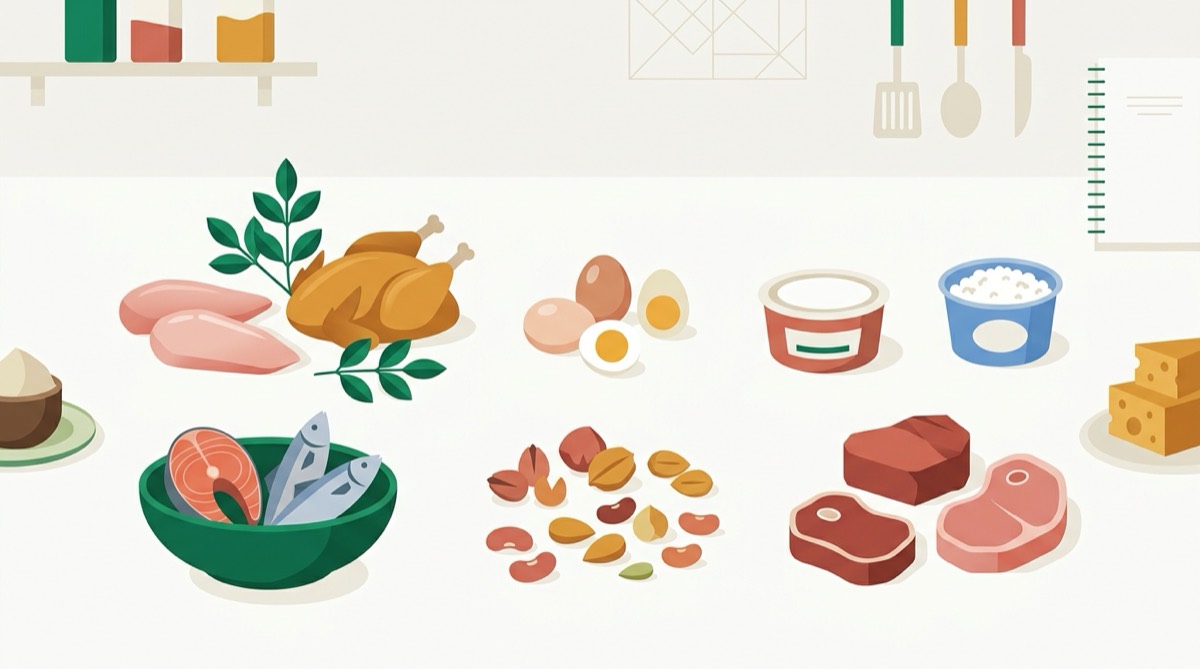
How much protein do I need is one of the most common questions in calorie tracking, and it only has a general answer, not a personal one this guide can hand you. What follows are the ranges nutrition professionals commonly cite, the foods that deliver protein most efficiently per calorie, and real meal totals built from sourced figures rather than estimates.
Key takeaways
- General guidance often points to roughly 0.7 to 1 gram of protein per pound of body weight for an active adult managing weight, above the minimum baseline used for sedentary adults. This is general information, not a personal prescription.
- Chicken breast and Greek yogurt are the two most protein-dense foods per calorie in this guide's sourced data, ahead of salmon, eggs and black beans.
- Paneer delivers meaningfully less protein per calorie than chicken breast, though it remains a legitimate vegetarian protein source in its own right.
- A high-protein day is very achievable from ordinary, sourced foods without needing a single supplement or specialty product.
- Protein plays a real role in feeling satisfied on a calorie budget and in preserving muscle during a deficit, though neither is a guarantee tied to any specific gram target.
How much protein is commonly recommended
Nutrition guidance generally separates a minimum baseline from a higher, activity-adjusted range. The minimum, commonly cited as roughly 0.36 grams per pound of body weight, is meant to prevent deficiency in a largely sedentary adult, not to optimize anything. For someone reasonably active and managing their weight, general guidance more often points toward something like 0.7 to 1 gram per pound, though the right figure for you depends on your goals, your activity level and your health history, and a registered dietitian can set a number specific to you rather than a general range. How much protein per day goes further into that range and how it shifts with body weight specifically.
It is also common to see general discussion of somewhat higher protein needs for older adults, since maintaining muscle mass tends to become a more deliberate effort later in life rather than something that happens by default. None of these ranges are a personal prescription, and none of them account for a specific health condition, kidney function, or medication that might change what is appropriate for you. They are starting points for a conversation with a doctor or dietitian, not a replacement for one.
Protein spread across the day, not just at dinner
A pattern that comes up often in general nutrition discussion is spreading protein intake across meals rather than concentrating most of it in one large dinner serving. Many people, without deliberately planning it, eat comparatively little protein at breakfast and lunch and then a large protein portion at dinner. General guidance often suggests aiming for a more even distribution instead, since the body can generally only make use of so much protein at any single sitting for tissue repair and maintenance.
This is not a rule with a hard cutoff, and skipping it entirely does not undo a day's total protein intake. It is a reasonable adjustment to consider if your current pattern is heavily backloaded, and it is often achievable just by moving something like eggs, Greek yogurt or a protein-containing legume earlier into the day rather than adding an entirely new food.
Why protein matters for a tracking day
Two mechanisms come up most often in general nutrition guidance. The first is satiety: protein is widely reported to be more filling per calorie than carbohydrate or fat for a lot of people, which matters directly if you are working from a calorie budget and trying to make it feel sustainable rather than like a constant negotiation. The second is preserving lean mass during a calorie deficit, where adequate protein intake alongside resistance activity is generally considered supportive, though it is one factor among several rather than a guarantee on its own. Neither mechanism promises a specific outcome, and both are general patterns rather than rules that apply identically to everyone.
The most protein-dense everyday foods
Ranking foods by protein delivered per 100 kcal, rather than by protein per typical serving, shows which foods actually give you the most for their calorie cost.
| Food | Calories per 100 g | Protein per 100 g | Protein per 100 kcal |
|---|---|---|---|
| Chicken breast, cooked | 144 kcal | 28.04 g | 19.47 g |
| Greek yogurt, plain | 67 kcal | 10.2 g | 15.22 g |
| Salmon, cooked | 274 kcal | 25.4 g | 9.27 g |
| Egg, whole, cooked | 143 kcal | 12.4 g | 8.67 g |
| Black beans, cooked | 131 kcal | 8.81 g | 6.73 g |
| Milk, 2% | 50 kcal | 3.36 g | 6.72 g |
| Dal, cooked | 145 kcal | 8.6 g | 5.93 g |
| Cheddar cheese | 409 kcal | 23.3 g | 5.70 g |
| Paneer | 299 kcal | 15.86 g | 5.30 g |
| Peanut butter | 598 kcal | 22.21 g | 3.71 g |
| Quinoa, cooked | 120 kcal | 4.38 g | 3.65 g |
| Almonds | 607 kcal | 20.33 g | 3.35 g |
| Hummus | 243 kcal | 7.35 g | 3.02 g |
Chicken breast leads this list, but Greek yogurt is closer behind it than most people expect, at roughly 15.2 g of protein per 100 kcal against chicken breast's 19.5 g. Both lead the list for the same underlying reason: very little fat or carbohydrate alongside a real amount of protein. Black beans and milk land close together further down the table, each contributing a meaningful amount of protein for a comparatively low calorie cost even though neither is usually thought of as a primary protein source. High-protein foods list covers more entries in this same ranked format.
This ranking describes the plain, unprepared food, and cooking method can move a food down this list without changing which food you logged. Chicken breast prepared plain sits at the top of this table; the same cut breaded and fried adds carbohydrate and fat from the coating and the frying oil, which lowers its protein-per-calorie figure meaningfully even though the underlying meat has not changed. The same caution applies to flavored or sweetened Greek yogurt, which adds sugar that a plain container does not carry, or to any food on this list served with a cream sauce or melted extra cheese: the preparation, not the base ingredient, is often what pulls a genuinely protein-dense food down toward the bottom of a ranking like this one.
Peanut butter and almonds land at the bottom of this list not because they are poor protein sources in absolute terms, both carry over 20 g of protein per 100 g, but because their very high fat content means each of those grams of protein arrives with more calories attached. They remain useful additions to a day's protein total; they are simply less efficient per calorie than a lean animal protein or a low-fat dairy product.
Protein in Indian cooking: paneer versus chicken
Paneer is a common vegetarian protein anchor in Indian cooking, and it is worth comparing honestly against chicken breast on protein specifically. Per USDA FoodData Central, paneer carries 15.86 g of protein per 100 g against chicken breast's 28.04 g, and once fat and calorie content are factored in, paneer delivers roughly 5.3 g of protein per 100 kcal against chicken breast's 19.47 g, meaning chicken breast is close to four times as protein-dense per calorie in this data.
That is not a case against paneer. It remains a legitimate, real source of protein, particularly for a vegetarian diet, and it brings calcium and fat that a pure lean meat does not. It does mean that matching chicken breast's protein contribution with paneer alone requires a meaningfully larger calorie allowance, which is worth knowing if you are comparing the two directly rather than assuming they are interchangeable gram for gram. One caution worth repeating: USDA's paneer entry lists a carbohydrate figure that runs high for what paneer is generally understood to contain, so this comparison sticks to the protein and calorie columns specifically rather than leaning on that carbohydrate number at all. Paneer versus chicken protein covers this comparison in more depth.
A high-protein Indian breakfast, built from real numbers
Protein-forward breakfasts are not limited to eggs and Greek yogurt. Here is a real Indian breakfast combination built entirely from sourced figures.
| Item | Serving | Calories | Protein |
|---|---|---|---|
| Idli | 3 pieces (114 g) | 146 kcal | 7.3 g |
| Egg, whole, cooked | 1 egg (50 g) | 72 kcal | 6.2 g |
| Paneer | 50 g | 150 kcal | 7.9 g |
| Total | 368 kcal | 21.4 g |
That is over 21 g of protein for well under 400 kcal, built from steamed rice cakes, a plain egg and a modest portion of paneer, none of it requiring a protein powder or a specialty product. High-protein Indian breakfast goes through more combinations built the same way.
Protein and weight loss
Protein's role in a weight-loss context is generally described in terms of satiety and lean mass preservation rather than any direct fat-burning effect on its own. Protein itself does not burn fat; what it more plausibly does is make a calorie deficit easier to sustain by keeping you fuller for longer, and help preserve muscle tissue while body fat is being lost, so that more of the weight lost comes from fat rather than lean mass. Neither effect is guaranteed at any specific gram target, and both interact with total calories, sleep, activity and stress in ways a protein number alone cannot capture.
If you have been logging consistently and the scale is not moving the way you expect, protein and weight loss and logging every day and the weight is not moving both cover why protein intake is one honest factor to check, alongside several others that have nothing to do with diet at all.
Building a high-protein day from sourced foods
Here is a full day assembled from figures already cited in this guide, showing what a genuinely high-protein day looks like without any single meal doing all the work.
| Meal | Items | Calories | Protein |
|---|---|---|---|
| Breakfast | 2 eggs + Greek yogurt (1 container) | 244 kcal | 27.7 g |
| Lunch | Chicken breast (1 medium breast) + black beans (1 cup) | 409 kcal | 49.5 g |
| Snack | Hummus (1 container) + almonds (1 package) | 474 kcal | 15.3 g |
| Dinner | Salmon (1 fillet) + quinoa (1 cup) | 588 kcal | 43.0 g |
| Day total | 1,715 kcal | 135.5 g |
That total lands close to a gram of protein per pound of body weight for someone in the 130 to 140 pound range, built entirely from whole foods with no protein powder involved, which is a useful reality check against the assumption that a high-protein target requires supplementation.
Common misconceptions worth clearing up
"You need to eat protein within a narrow window after exercise." This idea, sometimes called an anabolic window, has become far less emphasized in general nutrition guidance over time; total daily protein intake is generally considered to matter more than precise timing around a workout.
"Carb-heavy foods contribute meaningfully to a protein target." Rice, bread and most fruit contribute only a small amount of protein relative to their calories, as the ranked table above shows; building a protein target around grains and starches alone generally falls short even at large portions.
"Plant-based eating cannot deliver enough protein." It can, using a wider variety of sources like dal, black beans, hummus and dairy in place of meat and fish, though it typically requires more deliberate planning and larger portions of individual foods, not more total calories by default.
"More protein is always better." Beyond meeting a reasonable target for your goals and activity level, there is little general support for the idea that pushing protein intake higher and higher continues to add benefit, and very high intakes are generally a conversation to have with a doctor, particularly for anyone with existing kidney concerns. A reasonable target met consistently is more useful than an extreme one chased inconsistently.
How KalTrack tracks protein
Every logging path in KalTrack, photo, barcode, label and typed description, returns protein alongside calories, carbs and fat rather than calories alone. A barcode or label scan gives you the manufacturer's exact protein figure; a photo estimate approximates it the same way it approximates calories, which means the same correction habits covered elsewhere on this site apply here too. If you are working toward a specific protein target, log a day in KalTrack and see how close your ordinary meals already get you before changing anything.
This is general information about tracking food, not medical advice. If you are managing a health condition or working to a clinical target, talk to your doctor or a registered dietitian before changing how you eat.
Questions
How much protein do I need in a day?
General nutrition guidance often points to somewhere around 0.7 to 1 gram per pound of body weight for an active adult managing weight, well above the minimum baseline of roughly 0.36 grams per pound used for sedentary adults. The right number for you depends on your goals, activity and health history, so treat any general range as a starting point rather than a personal prescription.
What are the highest-protein foods I can log with confidence?
Per the USDA figures on this page, chicken breast and Greek yogurt deliver the most protein relative to their calories, followed by salmon, eggs and black beans. Plant options like dal and hummus contribute real protein too, just at a lower density per calorie.
Is paneer a good protein source compared to chicken?
It contributes real protein, but less per calorie than chicken breast, roughly 5.3 g per 100 kcal for paneer against about 19 g per 100 kcal for chicken breast in this data. Paneer remains a legitimate vegetarian protein option; it simply costs more calories per gram of protein than a lean meat does.
Can I get enough protein without eating meat?
Yes, using a wider variety and generally larger portions of plant and dairy sources like dal, black beans, kidney beans, hummus and Greek yogurt, since most individual plant foods are less protein-dense per calorie than lean meat or fish. It takes more deliberate planning, not more calories overall, necessarily.
Sources
- USDA FoodData Central, FDC ID 2705958: fdc.nal.usda.gov/food-details/2705958/nutrients
- USDA FoodData Central, FDC ID 2706286: fdc.nal.usda.gov/food-details/2706286/nutrients
- USDA FoodData Central, FDC ID 2707154: fdc.nal.usda.gov/food-details/2707154/nutrients
- USDA FoodData Central, FDC ID 2705386: fdc.nal.usda.gov/food-details/2705386/nutrients
- USDA FoodData Central, FDC ID 2705421: fdc.nal.usda.gov/food-details/2705421/nutrients
- USDA FoodData Central, FDC ID 2707427: fdc.nal.usda.gov/food-details/2707427/nutrients
- USDA FoodData Central, FDC ID 2705709: fdc.nal.usda.gov/food-details/2705709/nutrients
- USDA FoodData Central, FDC ID 2705740: fdc.nal.usda.gov/food-details/2705740/nutrients
- USDA FoodData Central, FDC ID 2707361: fdc.nal.usda.gov/food-details/2707361/nutrients
- USDA FoodData Central, FDC ID 2707537: fdc.nal.usda.gov/food-details/2707537/nutrients
- USDA FoodData Central, FDC ID 2707489: fdc.nal.usda.gov/food-details/2707489/nutrients
- USDA FoodData Central, FDC ID 2707402: fdc.nal.usda.gov/food-details/2707402/nutrients
- USDA FoodData Central, FDC ID 2708400: fdc.nal.usda.gov/food-details/2708400/nutrients
- USDA FoodData Central, FDC ID 2708346: fdc.nal.usda.gov/food-details/2708346/nutrients