Rice Calories: Raw, Cooked and by the Cup
· Viral Tandel
Rice calories sound like they should be a simple lookup, until you notice that a "100 grams of rice" answer can mean two very different things depending on whether that 100 grams was weighed before or after cooking. This guide gives the cooked figures, by the cup and per 100 grams, sourced from USDA FoodData Central, and explains why the raw-versus-cooked mix-up happens in the first place.
Key takeaways
- A cup of cooked white rice (174 g) is 167 kcal. A cup of cooked brown rice (195 g) is 240 kcal, per USDA.
- Brown rice is not lower in calories than white rice gram for gram; it is very slightly higher, and its real advantage is fiber, not a calorie savings.
- Rice absorbs water as it cooks, which is why a raw-rice number and a cooked-rice number for the same rice will never match: cooking adds water weight, not calories.
- Quinoa, a common rice alternative, runs higher in both calories and protein per cooked cup than either white or brown rice.
- Rice cooked into a dish, biryani, fried rice, pulao, typically carries added oil or ghee that a plain rice figure does not include.
White rice vs brown rice, cooked
| Rice | Serving | Calories | Protein | Carbs | Fat |
|---|---|---|---|---|---|
| White rice, cooked | 100 g | 96 kcal | 2.0 g | 21.0 g | 0.2 g |
| White rice, cooked | 1 cup (174 g) | 167 kcal | 3.5 g | 36.5 g | 0.3 g |
| Brown rice, cooked | 100 g | 123 kcal | 2.4 g | 25.8 g | 1.1 g |
| Brown rice, cooked | 1 cup (195 g) | 240 kcal | 4.7 g | 50.2 g | 2.2 g |
Two things are worth noticing here. First, brown rice is not the lower-calorie choice gram for gram, it runs a little higher than white rice, both in calories and in fat. Its real nutritional advantage is fiber and the nutrients that come with keeping the bran layer, not fewer calories per serving. Second, a cup of brown rice weighs more than a cup of white rice once cooked, 195 g against 174 g, so part of the gap between a cup of each is simply that you are comparing slightly different weights of food, not equal amounts.
Why "raw" and "cooked" rice numbers never match
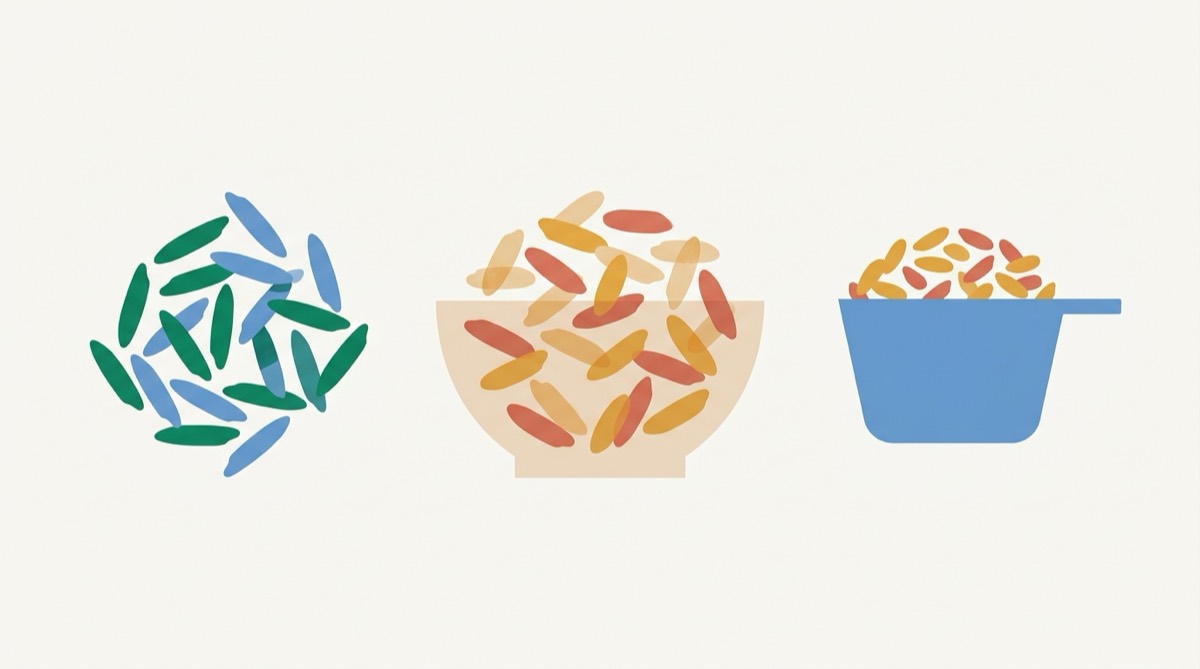
This is the actual source of most rice calorie confusion, and it has nothing to do with which rice you picked. Dry rice absorbs a large amount of water as it boils or steams, which means the same handful of dry rice becomes noticeably heavier, and takes up noticeably more space, once it is cooked. Water has no calories, so all that added weight dilutes the rice's calories per gram without changing the total calories in the pot at all.
The figures in this guide are for cooked rice, matching how you actually log a meal off your plate. If a recipe or a package gives you a raw-rice weight instead, the honest move is to weigh the rice again after cooking rather than guess at a conversion, since the exact amount of water absorbed varies with rice type and cooking method, and this site is not going to hand you an invented ratio to multiply by. Weighing the cooked result and logging that is both simpler and more accurate.
Quinoa, a common rice alternative
| Grain | Serving | Calories | Protein | Carbs | Fat |
|---|---|---|---|---|---|
| Quinoa, cooked | 1 cup (170 g) | 204 kcal | 7.4 g | 36.1 g | 3.2 g |
Quinoa runs higher in calories per cooked cup than white rice, though a little lower than brown rice in this data, and meaningfully higher in protein than either, 7.4 g against 3.5 g for white rice and 4.7 g for brown rice at a similar-sized serving. It is not a strict swap-in replacement nutritionally, more a different set of trade-offs than a straight upgrade or downgrade. The quinoa and lentils calories guide covers it alongside other grain and legume options in more depth.
What rice sits next to on the plate
A cup of white rice next to a serving of chicken breast calories, 100 g of cooked chicken breast is 144 kcal with 28.0 g of protein per USDA, or a side of broccoli calories, 41 kcal per 100 g cooked, is a common enough plate that it is worth knowing all three figures rather than only the rice. Rice supplies the bulk of the carbohydrate on a plate like that; the protein and vegetable sides are doing most of the rest of the nutritional work.
Rice cooked into a mixed dish stops behaving like plain rice the moment oil, ghee or stock enters the pot. A biryani, a pulao or a fried rice can carry meaningfully more fat and calories per cup than the plain boiled figures above, and there is no single conversion that covers every recipe. The biryani calories guide breaks that specific dish down using the same sourced approach as this one; for a fried rice or pulao you made yourself, weighing the finished dish and logging it as its own item beats trying to back-calculate from a plain-rice number.
Logging rice accurately
Weigh cooked rice with a kitchen scale when you can. "A cup" is a real measure but an inconsistently packed one, and the difference between a loosely spooned cup and a tightly packed one is bigger than it looks. For packaged, pre-cooked or instant rice, the barcode gives you the manufacturer's own figures directly, and that path is free and unlimited to use.
For a home-cooked plate where rice is one part of a bigger dish, the everyday foods calories guide has more staples built the same sourced way as this one, useful for filling in the rest of the plate. Next time rice is part of your meal, log it in KalTrack and correct the portion against a scale reading if the estimate looks off.
This is general information about tracking food, not medical advice. If you are managing a health condition or working to a clinical target, talk to your doctor or a registered dietitian before changing how you eat.
Questions
How many calories are in a cup of cooked rice?
A cup of cooked white rice (174 g) is 167 kcal. A cup of cooked brown rice (195 g) is 240 kcal, using a slightly larger cup weight, per USDA FoodData Central.
Why do raw rice and cooked rice show such different calorie numbers?
Rice absorbs water as it cooks, so the same amount of dry rice ends up weighing more once cooked, without gaining any calories. A per-100-gram figure for raw rice and one for cooked rice describe different amounts of water in the same food, not different foods.
Is brown rice lower in calories than white rice?
No, gram for gram it is very slightly higher: 123 kcal per 100 g cooked against 96 kcal for white rice, per USDA. Brown rice's advantage is more fiber and more micronutrients from the retained bran, not fewer calories.
Does the way rice is cooked change its calories?
Plain boiled or steamed rice matches the figures in this guide closely. Rice cooked into a dish like biryani or fried rice usually picks up oil, ghee or butter along the way, which adds calories the plain rice figure does not include.
Sources
- USDA FoodData Central, FDC ID 2708422: fdc.nal.usda.gov/food-details/2708422/nutrients
- USDA FoodData Central, FDC ID 2708414: fdc.nal.usda.gov/food-details/2708414/nutrients
- USDA FoodData Central, FDC ID 2708400: fdc.nal.usda.gov/food-details/2708400/nutrients
- USDA FoodData Central, FDC ID 2705958: fdc.nal.usda.gov/food-details/2705958/nutrients
- USDA FoodData Central, FDC ID 2710792: fdc.nal.usda.gov/food-details/2710792/nutrients