Thanksgiving Plate Calories: What a Full Plate Costs
· Viral Tandel
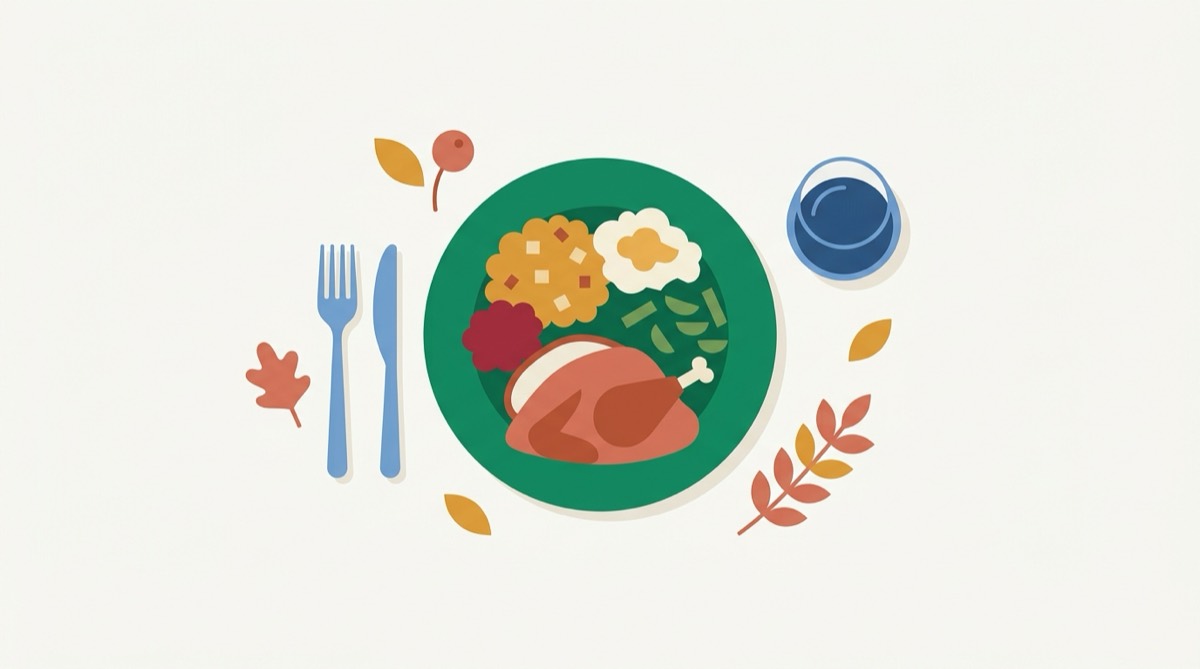
Thanksgiving plate calories resist a single number more than almost any other meal of the year, because a Thanksgiving plate is really six or eight different dishes stacked together, each one prepared differently in every kitchen that makes it. This guide will not hand you a made-up total for the whole plate. It will tell you what actually has a real number behind it, what does not, and how to log the meal honestly either way.
Key takeaways
- There is no reliable single figure for "a Thanksgiving plate." Portions and preparation, especially added butter, oil and sugar, vary too much between kitchens.
- Turkey, stuffing, gravy, cranberry sauce and pie have no verified figure in the sources this site uses. The honest answer for each is that it varies by recipe, so scan it if it is packaged, or log your best estimate if it is not.
- Plain baked potato and plain baked sweet potato do have real USDA figures, useful as a floor for those sides even though most Thanksgiving preparations add more on top.
- One meal does not call for restriction before or after it. This guide will not suggest a bigger deficit to offset a big day.
- Logging the plate by component, before gravy or sauce is poured over everything, gives you a more honest record than guessing at one combined total.
Why a Thanksgiving plate resists one number
A Thanksgiving plate is not one dish, it is a small buffet compressed onto one plate: turkey, stuffing, mashed potatoes, gravy, a vegetable side or two, cranberry sauce, a dinner roll, and pie to follow. Every one of those is cooked differently in every kitchen that makes it, and several of the biggest calorie contributors, butter worked into stuffing, gravy made from pan drippings, the oil in a pie crust, are exactly the kind of preparation detail a database entry or a photo cannot see.
None of the classic Thanksgiving dishes, turkey, stuffing, gravy, cranberry sauce or pumpkin pie, have a verified figure in the sources this site uses. Rather than invent one, the honest answer for each is the same: it varies by recipe, so if a version is packaged, scan its barcode, and if it is homemade, log your best estimate and correct it afterward rather than skip it because the exact number feels unknowable.
What actually has a sourced number
Two sides on a typical Thanksgiving table do have a real published figure. A plain baked potato runs 93 kcal per 100 g, with 2.0 g protein, 21.5 g carbs and 0.1 g fat, per USDA FoodData Central. A plain baked sweet potato with no added fat runs 82 kcal per 100 g, with 1.6 g protein, 18.0 g carbs and 0.4 g fat, also per USDA FoodData Central.
Treat both figures as a floor rather than the final answer. Classic Thanksgiving mashed potatoes carry butter, cream and salt well beyond the plain baked version, and a candied sweet potato casserole with brown sugar and marshmallow sits considerably higher than the baseline sweet potato figure above. The vegetable itself is not what makes the dish rich; what is added to it during Thanksgiving-style preparation is, and none of that addition has a sourced number of its own.
The packaged staples hiding in a homemade meal
Even an otherwise from-scratch Thanksgiving often leans on a few packaged staples: canned cranberry sauce, canned pumpkin for the pie, a jarred or packet gravy mix, boxed stuffing. Every one of those has a barcode, and scanning it gets you the manufacturer's own published figures instead of a guess, the same free and unlimited path that works for any packaged food the rest of the year. Before you estimate a dish from a photo, it is worth a quick check of the pantry items that went into it. A can or a box is a genuine shortcut to an exact number that a finished, plated dish cannot offer.
A practical way to log the plate
Photograph or note each component before gravy, sauce or dressing gets poured over everything, since once they are mixed together no photo and no guess can separate them back out. Log turkey, stuffing, potatoes, vegetables and pie as separate items rather than one combined "Thanksgiving dinner" entry, correcting portions where you can, especially for anything a host prepared and you did not see the ingredients go into.
A shared holiday table is, for logging purposes, a lot like logging a restaurant meal when there is no barcode: nothing on the table has a package to scan, so your best move is a careful estimate by component rather than waiting for an exact figure that will not arrive. The same instinct applies here, whether the kitchen belongs to a restaurant or a relative.
One meal in a longer pattern
A single big meal, however large, is a small part of a much longer pattern, and it does not call for restriction before or after it. This guide will not suggest a bigger deficit the day before to make room, or a stricter one the day after to offset it. The most useful thing you can do with a day like this is log it as honestly as the food allows and let the following weeks average out the way they naturally will, the same approach tracking through the holidays takes to the whole season rather than one day of it.
For the everyday version of several of these same sides outside of a holiday context, see the everyday foods calories guide. And if this is the meal that makes you want to start logging consistently rather than only on holidays, starting a calorie tracking habit in the new year picks up exactly where a single honest day leaves off.
Whatever ends up on your plate this year, log it in KalTrack by component, and treat the baseline figures above as a starting point rather than the whole story.
This is general information about tracking food, not medical advice. If you are managing a health condition or working to a clinical target, talk to your doctor or a registered dietitian before changing how you eat.
Questions
How many calories are in a full Thanksgiving plate?
There is no single honest number. A plate depends entirely on portions and preparation: how much butter is in the mashed potatoes, how much oil is in the stuffing, how the turkey was cooked. Anyone who gives you one figure for the whole plate is guessing.
Which Thanksgiving sides have a reliable calorie figure?
Plain baked potato and plain baked sweet potato both have a published USDA figure. Classic Thanksgiving preparations, mashed with butter and cream, or candied with brown sugar, will run higher than the plain baseline, so treat those figures as a floor, not the final number.
Should I eat less the day after Thanksgiving to make up for it?
No. One meal does not call for a compensating deficit the next day. A single meal is a small part of a much longer pattern, and the most useful thing you can do afterward is keep logging honestly.
What is the best way to log a shared Thanksgiving meal with no barcode?
Treat it the way you would any restaurant or home-cooked meal with nothing to scan: log it by component where you can, photograph the plate before things get mixed together, and correct portions afterward if the estimate looks off.