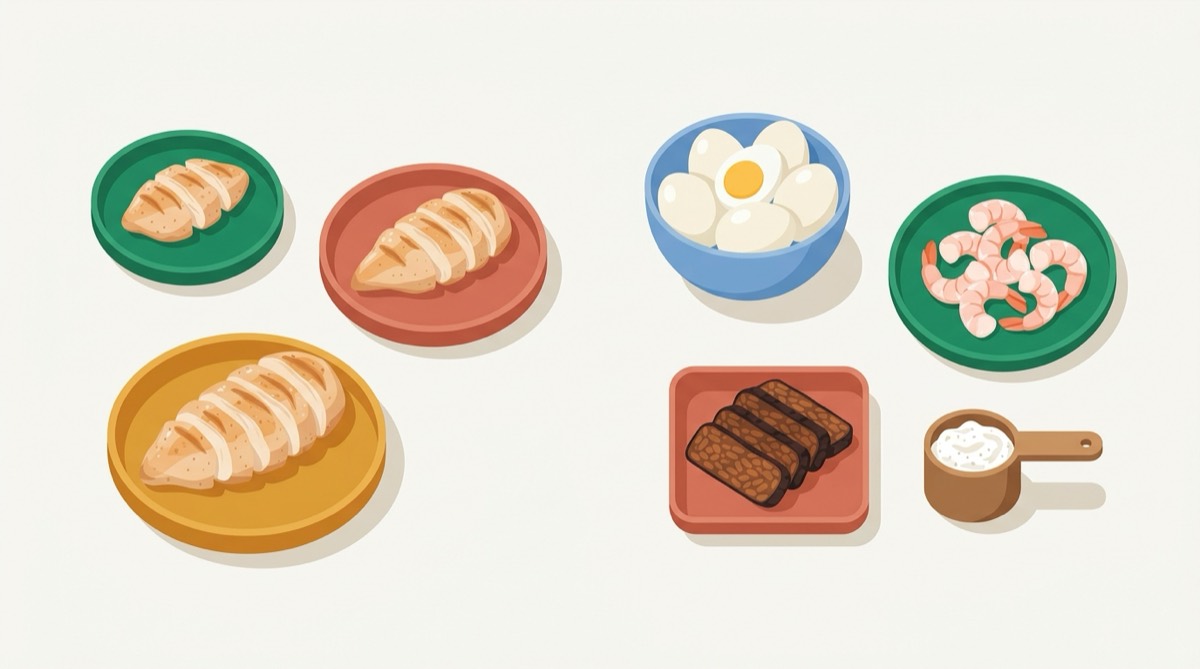
Chicken breast by portion: 3 oz, 4 oz and 8 oz, measured
· Viral Tandel
Looking up 4 oz chicken breast protein returns a different answer almost every time, and the reason is rarely the chicken. It is that ounces describe a weight, and nobody says whether they mean the weight before cooking or after. Here are the figures from the United States Department of Agriculture, with that question answered explicitly.
Key takeaways
- USDA's skinless rotisserie breast is 144 kcal and 28.04 g of protein per 100 g, as eaten.
- 4 oz is 113 g: about 163 kcal and 31.7 g of protein.
- 8 oz is 227 g: about 327 kcal and 63.6 g of protein.
- These are cooked weights. Meat loses water while cooking, so a raw 4 oz piece is not a cooked 4 oz piece.
- Pick raw or cooked, stay on it, and your week will compare with itself even if the absolute figure drifts.
Every portion, on one basis
All figures use USDA's rotisserie chicken breast eaten without the skin, at 144 kcal and 28.04 g protein per 100 g, converted at the 28.35 g per ounce weight USDA publishes for cooked chicken.
| Portion | Grams | kcal | Protein | Fat |
|---|---|---|---|---|
| 3 oz | 85 | 122 | 23.8 g | 3.0 g |
| 4 oz | 113 | 163 | 31.7 g | 4.0 g |
| 6 oz | 170 | 245 | 47.7 g | 6.1 g |
| 8 oz | 227 | 327 | 63.6 g | 8.1 g |
Three ounces is the portion most dietary reference material uses. It is also considerably smaller than what arrives on a restaurant plate, which is worth knowing before you assume your chicken salad contained one.
The raw against cooked problem
This is the single largest source of disagreement between any two chicken figures you will find.
Chicken loses water as it cooks. The same breast weighs meaningfully less out of the pan than it did going in, and the nutrients are now concentrated into less weight. So 100 g of cooked chicken contains more protein than 100 g of raw chicken, even though nothing was added.
USDA's entries used here are for the food as eaten, which means cooked. If you weigh your chicken raw and apply a cooked figure, you will overstate both the calories and the protein. If you weigh it cooked and apply a raw figure, you will understate them.
Neither is a disaster. Picking one and never switching is what matters, for the same reason consistency beats precision throughout why photo calorie estimates run low. An error that is the same size every week is visible in a trend. An error that changes direction depending on how you felt that day is not.
The practical advice: weigh it cooked if you can, because that is what USDA's figures describe and it is also what you actually ate. If weighing raw is easier for batch cooking, that is fine too, but write down which you are doing.
What the cooking method does
| Breast, skin not eaten | kcal per 100 g | Protein | Fat |
|---|---|---|---|
| Rotisserie | 144 | 28.04 g | 3.57 g |
| Stewed | 149 | 27.96 g | 3.26 g |
| Sauteed | 176 | 29.62 g | 5.45 g |
Rotisserie and stewed are within five calories. Sauteed is 32 higher, and the extra is fat from the pan rather than anything that happened to the chicken.
Eating the skin is a bigger step again: rotisserie breast with the skin eaten is 175 kcal per 100 g against 144 without, and it is the same decision examined in detail for chicken thighs, where the gap is wider still.
Using this with a protein target
A 4 oz breast delivering roughly 32 g of protein is a useful unit to think in, because most daily protein targets land somewhere between four and six of them. The protein guide covers how to set that target, and setting macro targets covers where the rest of the day goes.
What this page is for is making sure the 32 g is real rather than assumed. A breast you did not weigh, cooked in a pan you did not account for, logged against a raw figure, can easily be out by a third in either direction.
KalTrack estimates the portion from a photo and shows you the weight it assumed, so you can correct the number that actually matters before it is logged. Point it at your plate.
This is general information about published nutrition data, not medical advice. If you have been given a protein target by a clinician or a registered dietitian, follow theirs.
Questions
How much protein is in 4 oz of chicken breast?
About 32 g, using USDA's rotisserie breast eaten without the skin at 28.04 g per 100 g. Four ounces is 113 g, which gives 31.7 g of protein and about 163 kcal.
How much protein is in 8 oz of chicken breast?
About 64 g, and roughly 327 kcal, on the same figures. Eight ounces is 227 g, so it is simply double the 4 oz numbers.
Is 3 oz of chicken breast a lot?
It is the portion most dietary guidance uses as a reference, and it comes to 85 g, about 122 kcal and 24 g of protein. It is smaller than most restaurant servings.
Should I weigh chicken raw or cooked?
Either, as long as you are consistent and the figure you use matches. Meat loses water as it cooks, so the same breast weighs noticeably less cooked than raw. USDA's figures here are for the cooked food as eaten.
Does the cooking method change the numbers much?
Some. Skinless breast runs 144 kcal per 100 g rotisserie, 149 stewed and 176 sauteed. The sauteed figure is higher because of the fat used in the pan.
Sources
- USDA FoodData Central, FNDDS, FDC ID 2705964 (chicken breast, rotisserie, skin not eaten): fdc.nal.usda.gov/food-details/2705964/nutrients
- USDA FoodData Central, FNDDS, FDC ID 2705963 (chicken breast, rotisserie, skin eaten): fdc.nal.usda.gov/food-details/2705963/nutrients
- USDA FoodData Central, FNDDS, FDC ID 2705972 (chicken breast, sauteed, skin not eaten): fdc.nal.usda.gov/food-details/2705972/nutrients
- USDA FoodData Central, FNDDS, FDC ID 2705966 (chicken breast, stewed, skin not eaten): fdc.nal.usda.gov/food-details/2705966/nutrients