
A Diwali Eating Guide: Sweets, Snacks and Calories
· Viral Tandel
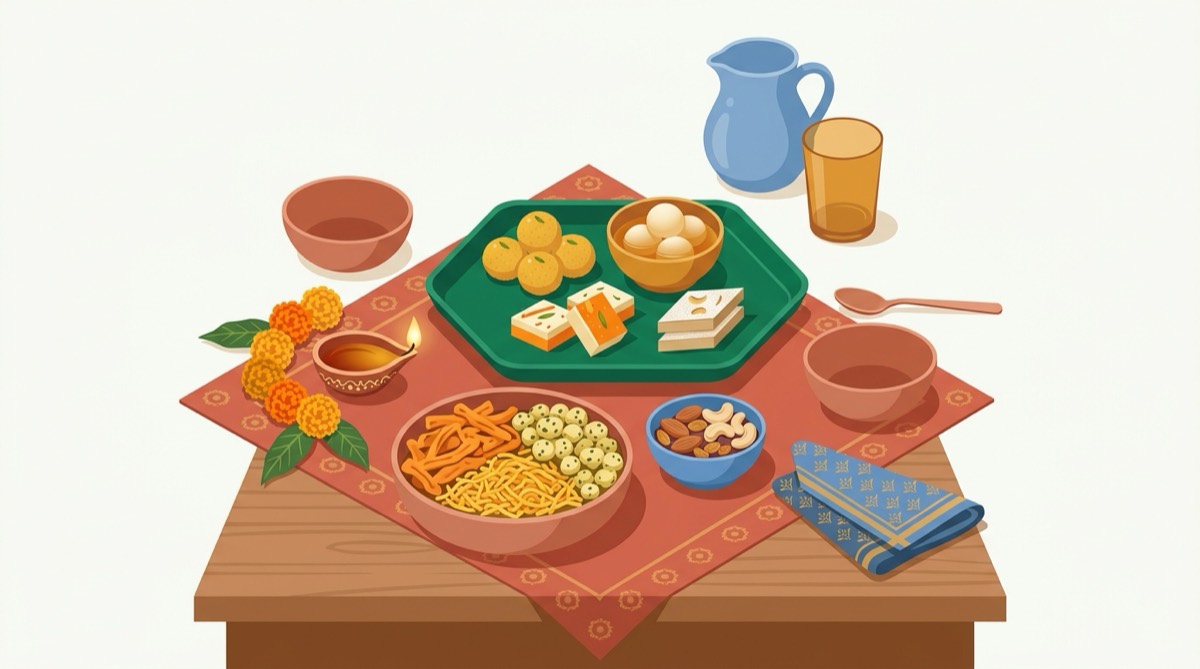
Diwali is built around family, light, and food shared generously, and a lot of that food is genuinely hard to put a number on. This guide is not about eating less during the festival. It is about logging what you actually eat as honestly as the food allows, so the days around Diwali are a real part of your record rather than a gap in it.
Key takeaways
- Homemade mithai, gulab jamun, jalebi, ladoo, barfi, has no verified calorie figure this site can stand behind. Sugar syrup and ghee vary too much by who made it.
- Samosa and pakora, common Diwali savory snacks, do have a real published figure from USDA FoodData Central, unlike most of the sweets.
- Boxed sweets from a shop often carry a barcode. Scanning it gets you the manufacturer's own figures instead of a photo having to guess at what is inside.
- The goal across a multi-day festival is an honest log, not a smaller number. Logging a sweet accurately is not a failure, whatever portion you choose.
- There is no need to plan a bigger deficit before or after Diwali to offset it. One festival is a small part of a much longer pattern.
Why Diwali food is hard to put one number on
A lot of what makes Diwali food taste the way it does, ghee brushed on at the end, sugar syrup soaked all the way through, condensed milk reduced for hours, is also exactly what a generic nutrition database cannot capture. None of the common sweets, gulab jamun, jalebi, ladoo, barfi, kaju katli, have a verified figure in the sources this site uses, and recipes for each vary enough between households and shops that a single number would be a guess dressed up as a fact. The Indian sweets and desserts calories guide goes into what is and is not knowable about this category in more depth, and gulab jamun and jalebi calories and halwa calories cover two of the most common Diwali sweets specifically, honestly, without inventing a figure neither has.
The savory snacks that do have a real number
Not everything on a Diwali plate is unknowable. Samosa and pakora, both common festival snacks, are in USDA FoodData Central with real published figures. A regular samosa (100 g) comes to 310 kcal, with 5.1 g protein, 33.2 g carbs and 17.5 g fat. A single pakora (12 g) is about 15 kcal, though pakoras rarely arrive one at a time, so count the pieces you actually ate before assuming the total is small. Neither figure includes any chutney served alongside, which is its own item to log separately. For the fuller breakdown of Indian snacks and mains with real sourced numbers, see the Indian food calories guide.
Namkeen and the other fried snacks on the table
Samosa and pakora are not the only savory snacks that show up around Diwali. Chakli, mathri, sev and mixed namkeen are just as common, and none of them have a verified figure in the sources this site uses either. They are fried, often more than once, and recipes vary by household and by brand enough that a single number would not mean much even if one existed. The honest approach is the same one used throughout this guide: if it is homemade, log your best estimate from a photo and correct the portion, since you know roughly how much oil went in even if a camera does not. If it came in a packet from a shop, check for a barcode before you estimate anything at all.
A full festive meal, not just the snacks
Diwali gatherings often include a proper meal alongside the sweets and namkeen, and that half of the table is easier to put real numbers to. Rice, dal, paneer dishes and biryani all have sourced figures in the Indian food calories guide, which is worth a read if the meal itself is as much a part of your Diwali as the mithai afterward. Logging that part of the plate accurately, by component rather than as one combined dish, gives you a more honest total than trying to estimate the whole thali as a single entry.
Boxed mithai and the barcode shortcut
If a sweet came from a shop in a sealed box rather than a family kitchen, check it for a barcode before assuming you have to estimate it from a photo. A surprising share of packaged Indian sweets carry one, and scanning it in KalTrack returns the maker's own published figures instead of a guess, free and unlimited, the same as any other packaged item. For homemade mithai without a barcode, a photo estimate is still worth logging, since ghee and sugar syrup are largely invisible in a photograph and the number will likely run low. Correcting the portion afterward, or simply treating the estimate as a floor rather than a ceiling, is the more honest habit than skipping the log entirely because the number feels uncertain.
Logging honestly across a multi-day festival
Diwali often spans several days of gatherings, not one meal, and the easiest thing to do with several days of uncertain food is to stop logging until it is over. That defeats the actual purpose of a log, which is an honest record, not a restrictive one. Log each sweet, snack and meal as best you can across the festival, correct portions when they look off, and treat a rough entry as far more useful than no entry at all.
There is also no need to plan around it as something to make up for. This guide will not suggest a bigger deficit beforehand or afterward, or any kind of compensating pattern once the festival is over. A few days of festival food are a small part of a much longer pattern, and the most useful thing you can do with your log is keep it honest through those days, then let the following weeks average out the way they naturally will.
Whatever is in front of you this Diwali, log it in KalTrack and let the barcode do the work wherever a box makes that possible.
This is general information about tracking food, not medical advice. If you are managing a health condition or working to a clinical target, talk to your doctor or a registered dietitian before changing how you eat.
Questions
How many calories are in Diwali sweets like gulab jamun or ladoo?
There is no verified figure this site can stand behind for homemade mithai. Sugar syrup absorption and ghee content vary enormously by who made it, which is exactly the kind of variation a single published number cannot capture honestly. Scan a boxed sweet's barcode if it has one, or log it as your best estimate and correct it if it looks off.
Do samosas and pakoras have a real calorie figure?
Yes. Both are in USDA FoodData Central with a published figure per 100 g, unlike most homemade festival sweets, so they are worth logging by that figure rather than guessing.
Should I eat less around Diwali to make up for extra sweets?
This guide is not about eating less around Diwali. It is about logging honestly, whatever you choose to eat, so you have real information afterward rather than a guess made in either direction.
What is the easiest way to log a box of mithai from a shop?
Check it for a barcode first. A surprising number of packaged sweets carry one, and scanning it gives you the maker's own published figures instead of a photo estimate having to guess at ghee and sugar syrup it cannot see.