Is Cal AI accurate? What photo calorie counting can and cannot do
· Viral Tandel
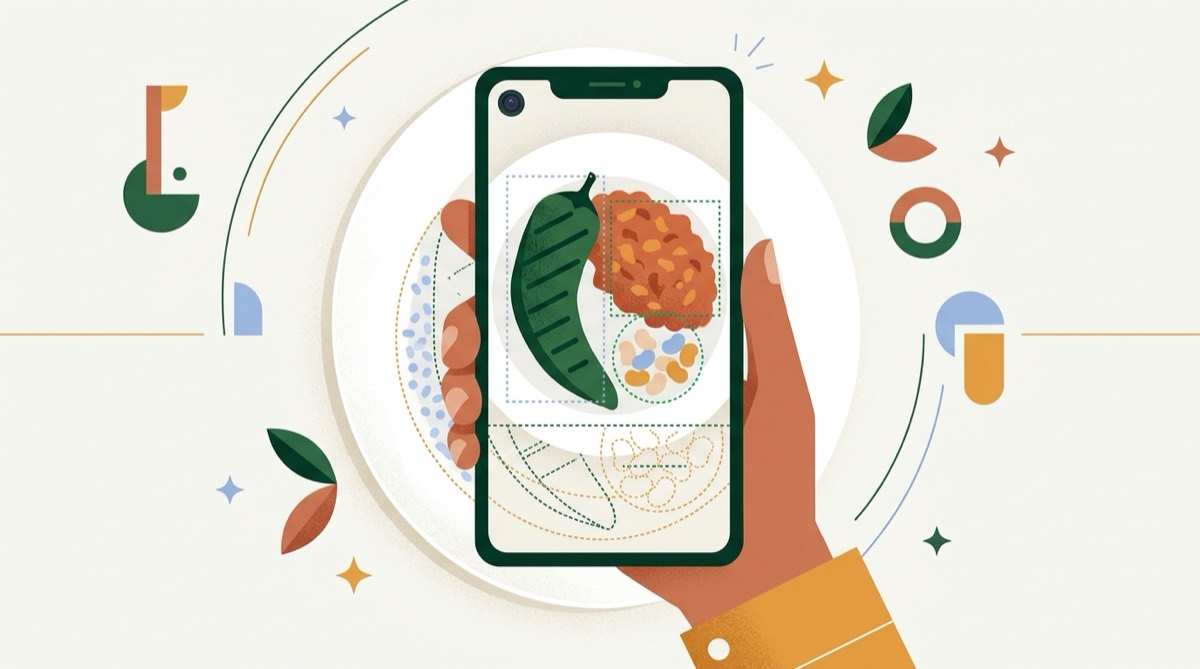
Is Cal AI accurate? The honest answer is the same as for every app that estimates calories from a photo, this one included: it is useful, it is not exact, and it tends to run low. That is not a verdict on one product. It is what the method does.
Key takeaways
- Independent testing reported in August 2026 found AI photo-based calorie tools underestimated by about 33 percent.
- The error is structural. A camera cannot see oil, butter, dressing or bowl depth, and all of those add calories.
- Because the bias runs one way, a photo estimate is a floor, not a measurement.
- A consistent low estimate is still useful for direction. Mixing photo days with label days is where logs go wrong.
- Barcodes and nutrition labels return real published figures. Use them whenever they exist.
Is Cal AI accurate? What the testing actually found
Research reported by Healio on 4 August 2026 tested AI photo-based calorie-tracking tools and found they underestimated by roughly 33 percent, about a third of the calories on the plate going uncounted. On a 2,000 kcal day that is roughly the difference between a deficit and no change at all.
That finding was about the category, not about a single app. Any tool that takes a photo and returns a calorie figure is doing the same three things: recognising the food, guessing the portion, and looking the result up in a database. Each step loses information, and the losses point the same way.
This site makes the same product. KalTrack estimates calories from a photo. So nothing here is an argument that a competitor is worse at this than we are. The point is that nobody has solved it, and you should use any of these tools knowing that.
Why the error only runs one direction
Oil and fat are invisible. A tablespoon of olive oil is 126 kcal by USDA figures, and once it is in a pan or a dressing it leaves no visual trace. A photo of a stir-fry looks identical whether the wok held one tablespoon or four.
Depth does not photograph. A bowl of rice, a curry, a pasta dish: the camera sees the surface. What is underneath is a guess, and the guess is usually conservative.
Things hide under other things. Cheese under toppings, butter melted into vegetables, sauce soaked into bread. The food that adds the most calories is often the food you cannot see.
Cuisine bias. Most training data and most food databases are built around Western plates. Mixed dishes from other cuisines get mapped to the nearest familiar entry, which is often lighter than the real thing. This is covered in detail in logging Indian food in a calorie tracker.
None of these push the estimate up. That is why the aggregate result is a consistent undercount rather than random noise, and it is the whole argument of why photo calorie estimates run low.
What accuracy you can realistically expect
Think of a photo estimate as a floor with a known direction of error. If a tool says 520 kcal, the plate is probably not 400. It might well be 650.
That sounds discouraging until you notice what it means for tracking over time. A log where every meal is estimated the same way, by the same method, with the same bias, still shows you whether this week is heavier or lighter than last week. The bias cancels. What breaks the log is inconsistency: a photo-estimated lunch next to a label-exact dinner next to a guessed breakfast, where the errors no longer point the same way.
How to double-check a calorie estimate covers the practical side of this.
Where KalTrack is the same, and where it is different
Same: the photo path has the same structural limits. We say so on our accuracy page and link the same study, because it is true of our estimates too.
Different, by design choice rather than by better physics:
- It shows you what it recognised, not only a number, so a bowl of dal misread as lentil soup is visible and correctable.
- Correcting a portion is the intended workflow, two taps, not a fallback.
- Barcodes and nutrition labels are read directly and never count against free scans, because the exact path should always be the cheap one.
- Indian and other non-Western dishes are recognised as themselves rather than mapped onto the nearest American entry.
A side-by-side with Cal AI specifically is in KalTrack compared with Cal AI. It is written to the same rule as this page: no invented accuracy percentages, for either app.
How to read any accuracy claim, including ours
A lot of the discussion around whether Cal AI is accurate, or whether any photo counter is, turns on numbers that nobody can trace. Three questions sort the useful claims from the rest.
Accurate against what? A calorie figure for a cooked plate can only be checked by weighing each ingredient and using published data for each one. If a claimed accuracy percentage does not say how the true value was measured, it is not a measurement of accuracy.
Accurate on which food? A tool can be excellent on a grilled chicken breast and a plain apple and poor on a curry, a casserole or a stir-fry. A single percentage that does not say what was tested is averaging over plates that behave completely differently.
Accurate in which direction? An estimator that is 20 percent low on average is more useful than one that is randomly 20 percent off, because a consistent bias cancels when you compare one week with the next. The direction matters more than the size.
This site holds itself to the same three questions. The only accuracy figure here is the independently reported 33 percent undercount for the category, because that is the only one with a method behind it. We do not publish a percentage for KalTrack's own photo estimates, and we would treat a competitor's self-reported figure the same way.
How to use any photo calorie counter well
Correct the obvious misses: the portion, the missed item, the sauce. Log the same way every day so the bias stays constant. And whenever a barcode or a label exists, use it, because a scanned barcode returns the manufacturer's figure rather than anyone's estimate.
If you want to see what a photo estimate looks like with the recognised items shown, KalTrack does that on every scan. Try it on your next plate.
This is general information about how photo calorie estimation works, not medical advice. If you are managing a health condition or following a prescribed diet, talk to a clinician or a registered dietitian.
Questions
Is Cal AI accurate?
About as accurate as any photo calorie estimator, which means it tends to run low. Independent testing reported in August 2026 found AI photo-based calorie tools underestimated by roughly a third. That is a property of the method, not of one app, and it applies to KalTrack as well.
Why do photo calorie counters underestimate?
A camera cannot see cooking oil, butter melted into food, dressing under leaves, or how deep a bowl is. All of those add calories, none of them show up in a photo, so the error runs in one direction.
Does that make photo calorie counting useless?
No. An estimate that is consistently low is still useful for seeing whether your week is going up or down. The problem is treating the number as exact, or comparing one day logged by photo against another logged by label.
What is more accurate than a photo?
A barcode or a nutrition label, because those return the manufacturer's own figures rather than an estimate. Any app that offers both should steer you to the exact path when it exists.
How should I use a photo calorie counter well?
Correct the portion when it is obviously wrong, log the same way every day so the bias stays constant, and reach for the barcode or label whenever one is available.